

Blog
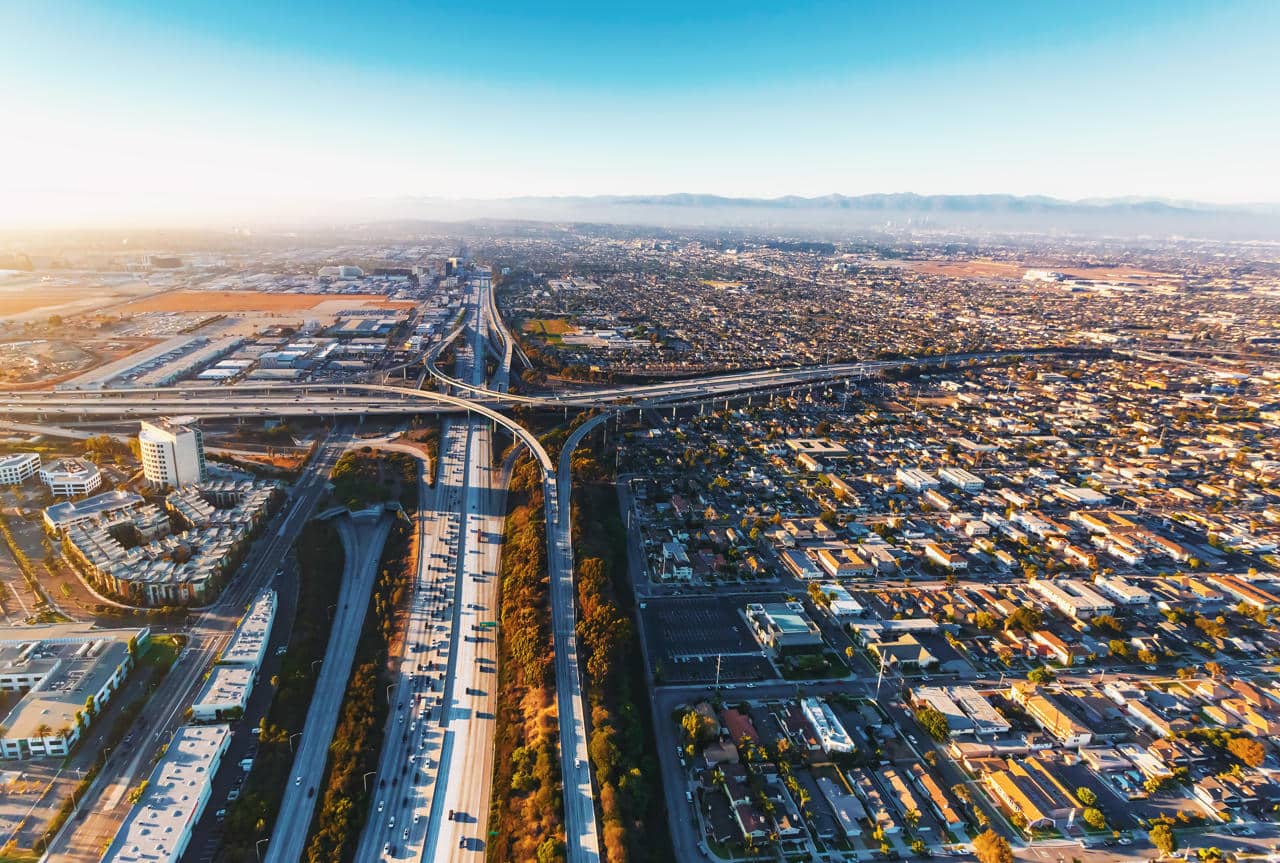
The distance from San Diego to the Los Angeles International Airport is 120 to 125 miles, depending on your starting point. On paper, that is a two-hour trip. In practice, it is one of the most variable drives in Southern California, a route that can run perfectly or not depending on when you leave, which freeway you take through Orange County, and what is happening on Century Boulevard the moment you need to reach the terminal.
This guide covers every realistic option, with the honest tradeoffs each one carries.
Before choosing how to get there, understanding what makes this particular corridor unpredictable matters more than any departure time calculator suggests.
The I-5 through Orange County is the most direct path north. It flows well from San Diego until it reaches the stretch between San Clemente and Irvine, where lanes compress and commuter volume from inland routes merges in. On a weekday between 7 and 9 a.m. or 3 and 7 p.m., that section adds 30 to 50 minutes with no warning. What makes it harder to anticipate is that the slowdown often begins before any visible cause. Traffic can go from moving at highway speed to a near-stop within half a mile, with no accident, no merge point, and no indicator on navigation apps until the vehicle is already in it
The I-405 approach into LAX is the final variable most travelers underestimate. Century Boulevard, the primary terminal access road, backs up during the afternoon and early evening hours, regardless of how cleanly the rest of the trip went. Arriving at the 405 on time does not mean arriving at the terminal on time.
The best departure windows based on consistent corridor behavior:
Any window between 3 and 7 p.m. on a weekday is the highest-risk departure for LAX flights.
The obvious choice for visitors who want full control. I-5 North is the fastest route in light traffic. The I-15 north connecting to the I-10 west works better for travelers starting from East County or Inland San Diego.
The real cost of driving yourself to LAX is not the gas. It is the parking. LAX’s on-site lots run $40 to $50 per day. For a five-day trip, that is $200 to $250 added to the flight cost before you reach the terminal. Economy lots require a shuttle transfer, adding 20 to 30 minutes to each end.
Driving also means you personally absorb every minute of traffic and arrive at a busy international airport having already spent two or more hours behind the wheel.
The Pacific Surfliner runs multiple departures daily between Santa Fe Depot in downtown San Diego and Los Angeles Union Station. Travel time is approximately 2.5 to 3 hours, depending on stops.
The train itself is typically the most predictable segment of the trip. The uncertainty begins after Union Station, where transferring to LAX introduces a separate schedule, another connection point, and a second potential delay that the original departure time cannot absorb. Total door-to-terminal time for most San Diego travelers lands between 4 and 5 hours.
The Pacific Surfliner works well for visitors departing from downtown San Diego with flexible flight times. It is a poor fit for early morning flights, anyone carrying significant luggage, or travelers connecting from North County or East County, where reaching Santa Fe Depot adds another leg before the train even departs.
Rideshare apps will complete this trip, and the price reflects the distance. A standard ride from the city to this airport averages around $130 to $170, depending on the time of day. Surge pricing during peak afternoon hours or on Friday evenings can push that considerably higher.
The functional limitation of rideshare on this route goes beyond price. Drivers accepting a San Diego-to-LAX trip often evaluate the likelihood of securing a return fare before agreeing to the request. Early-morning departures and pickups from lower-density residential neighborhoods can take longer to match than the app’s nearby-vehicle indicator suggests, sometimes 20 to 30 minutes in practice. For a 5 a.m. departure to catch an 8 a.m. international flight, that gap carries real consequences that no surge refund covers.
A private transfer differs from rideshare primarily in predictability. Departure time, vehicle assignment, and pickup details are established before travel day rather than depending on real-time availability. That distinction matters most on early-morning departures and return trips arriving late at LAX on delayed international flights, exactly the moments when on-demand availability is least reliable.
Most people plan the outbound trip carefully and assume the return will sort itself out. At LAX, it rarely does. The arrivals level on the lower roadway is one of the most congested pickup zones in the country during peak hours, rideshare wait times from Terminal 1 through Terminal 8 regularly exceed 25 minutes after 6 p.m., and the designated app pickup lot – the LAX-it lot off Sepulveda Boulevard – adds a shuttle transfer before a vehicle can even be requested. Anyone relying on an on-demand option after a long international flight is making that decision at the worst possible moment.
LAX manages over 88 million passengers annually, and its terminal access roads reflect that volume during peak hours. A few practical realities:
The 120-mile distance between San Diego and LAX is fixed. Everything else – time, cost, certainty – depends entirely on how you choose to cover it.
Share this: